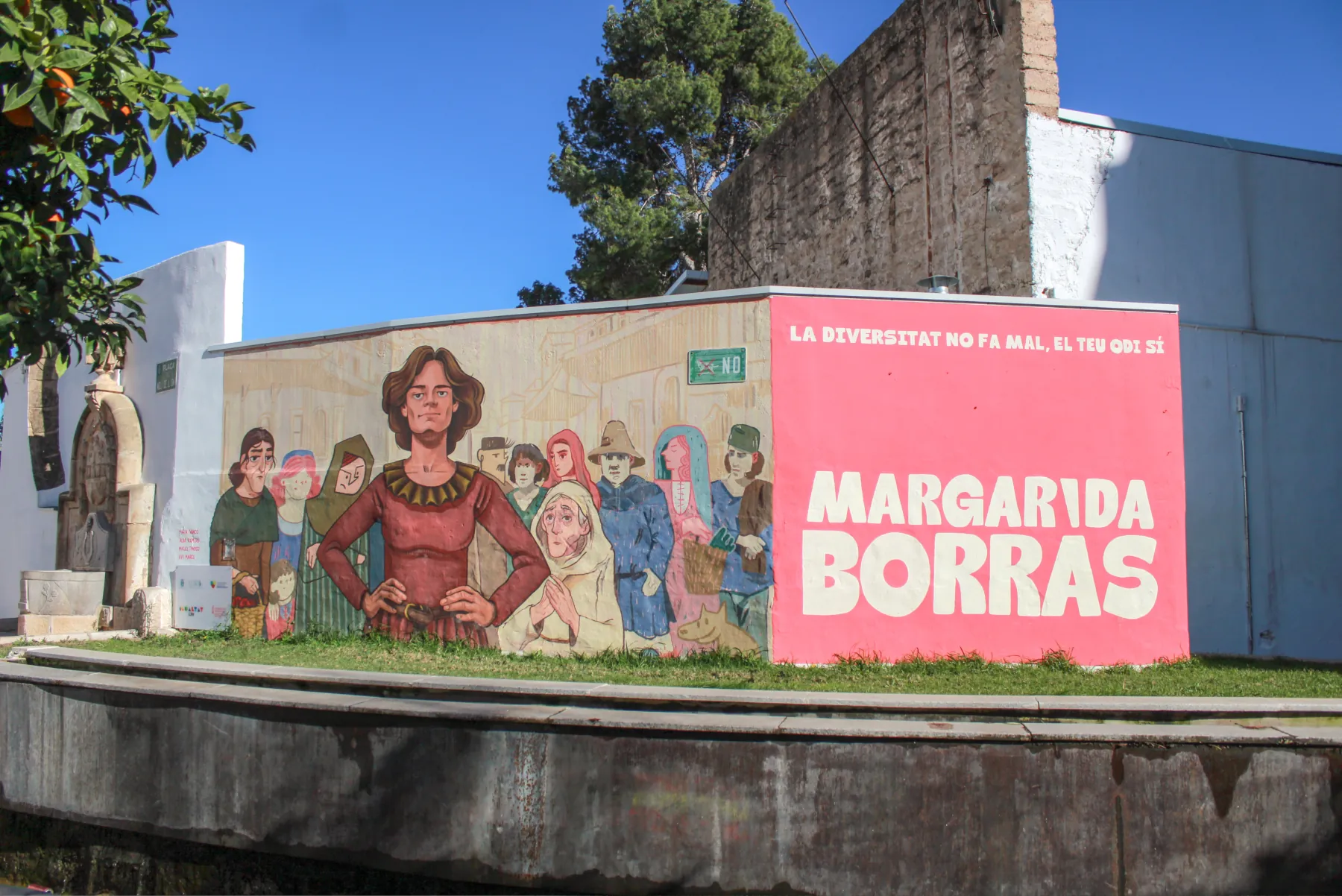
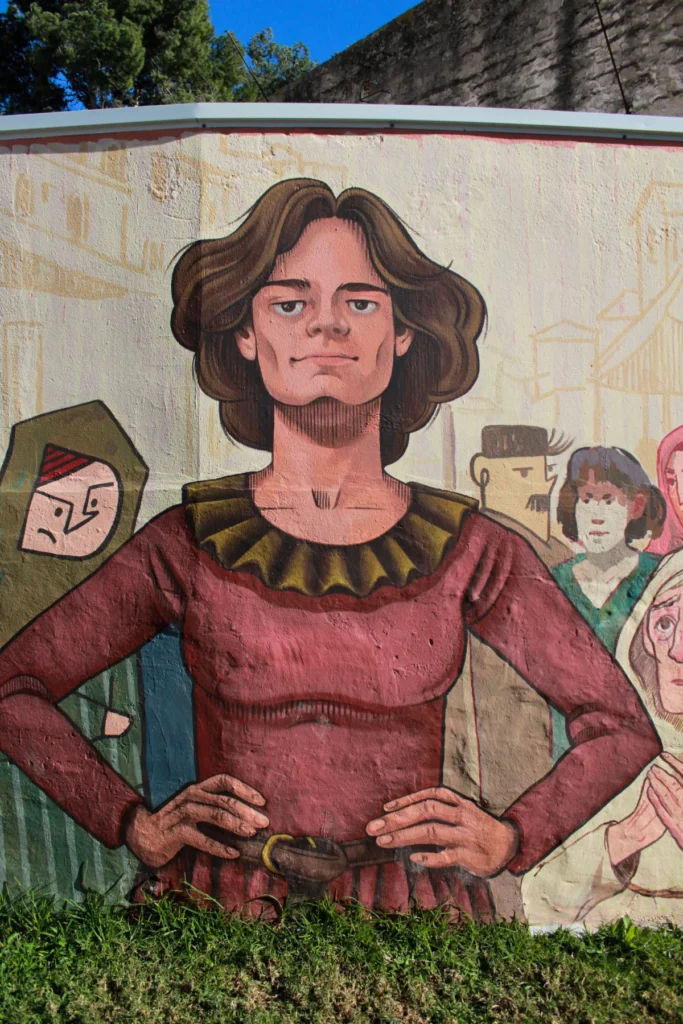
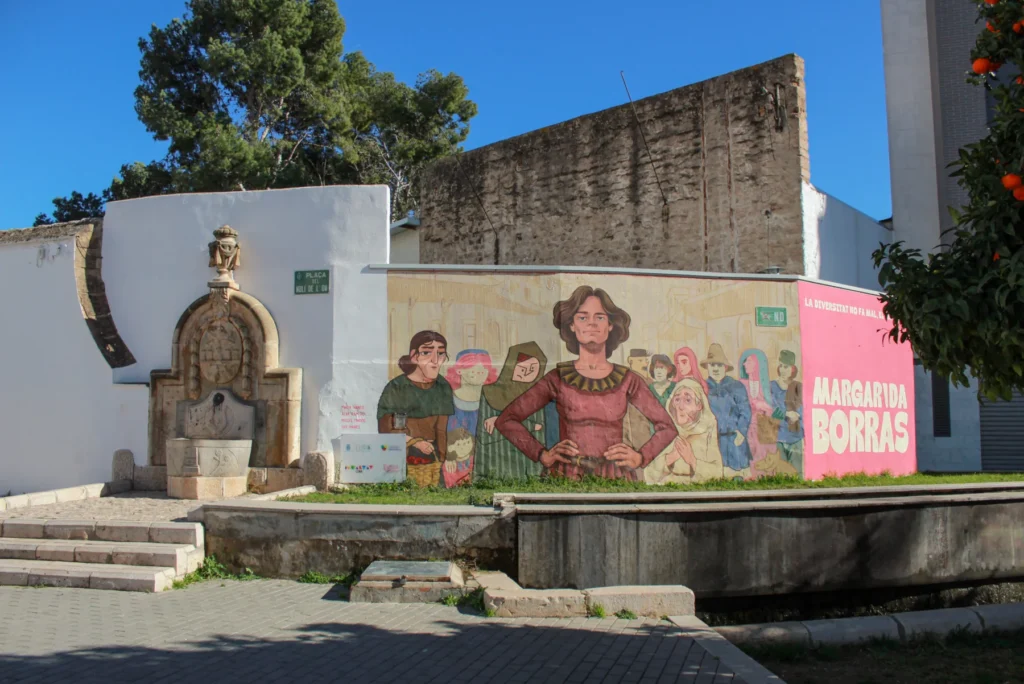
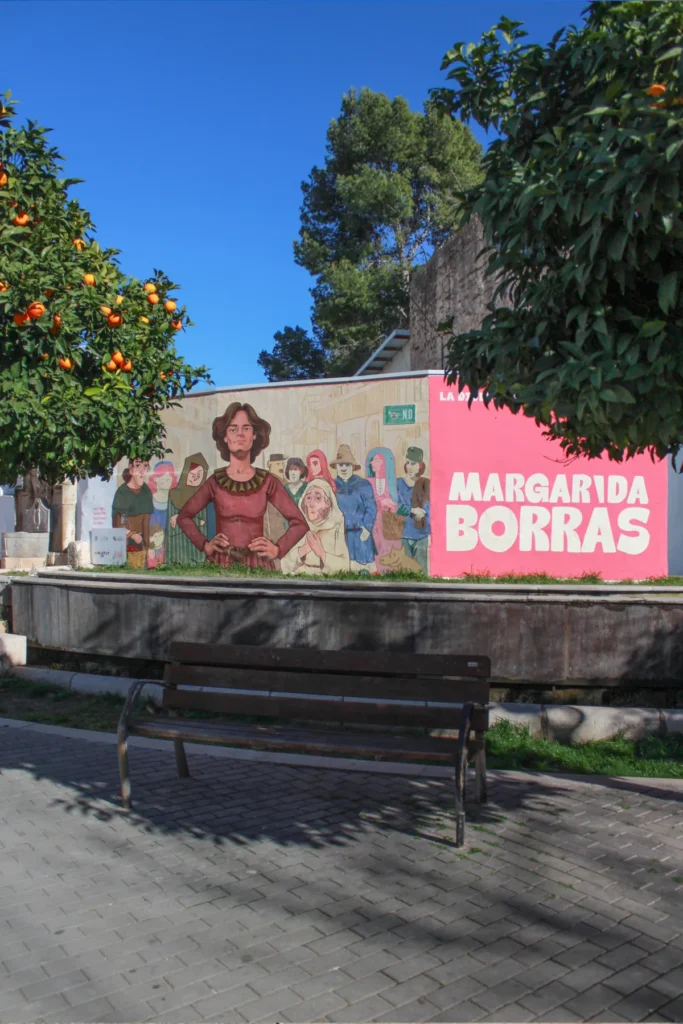
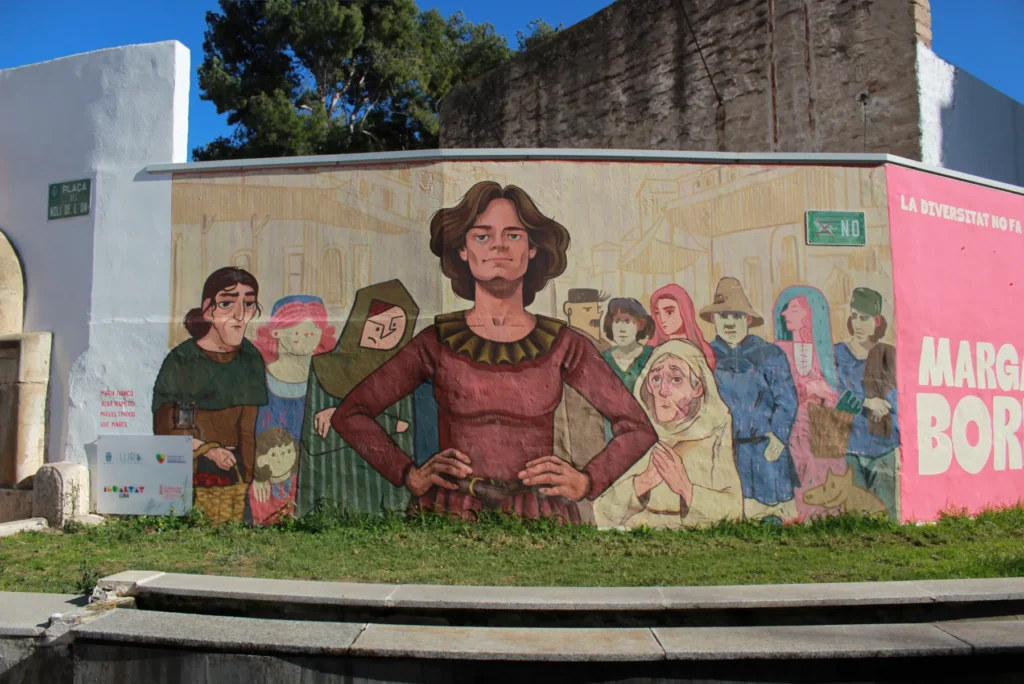
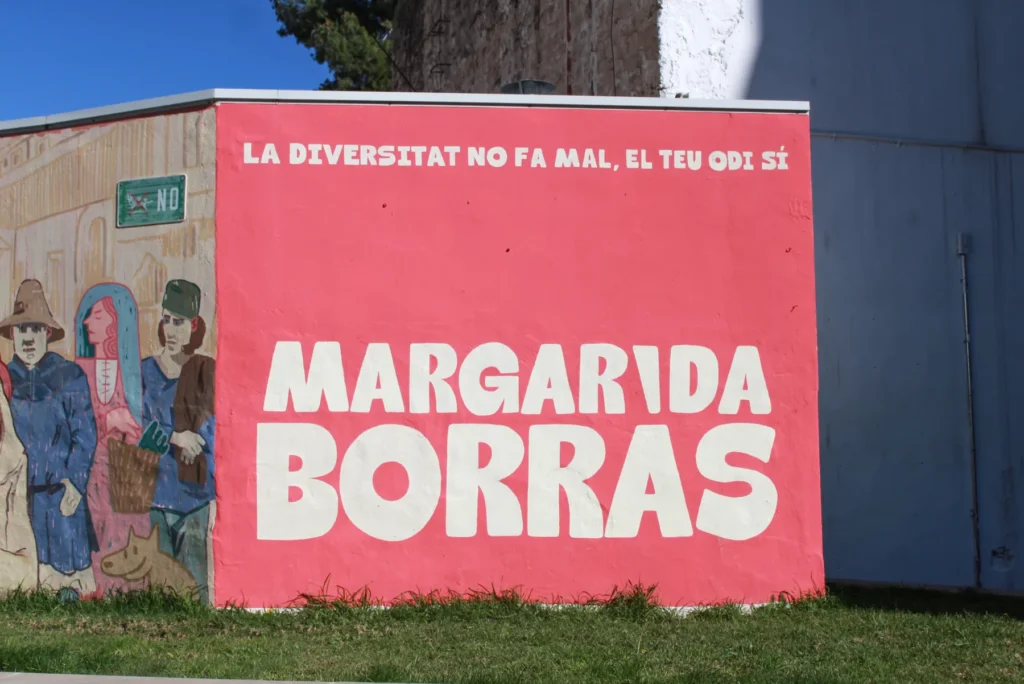
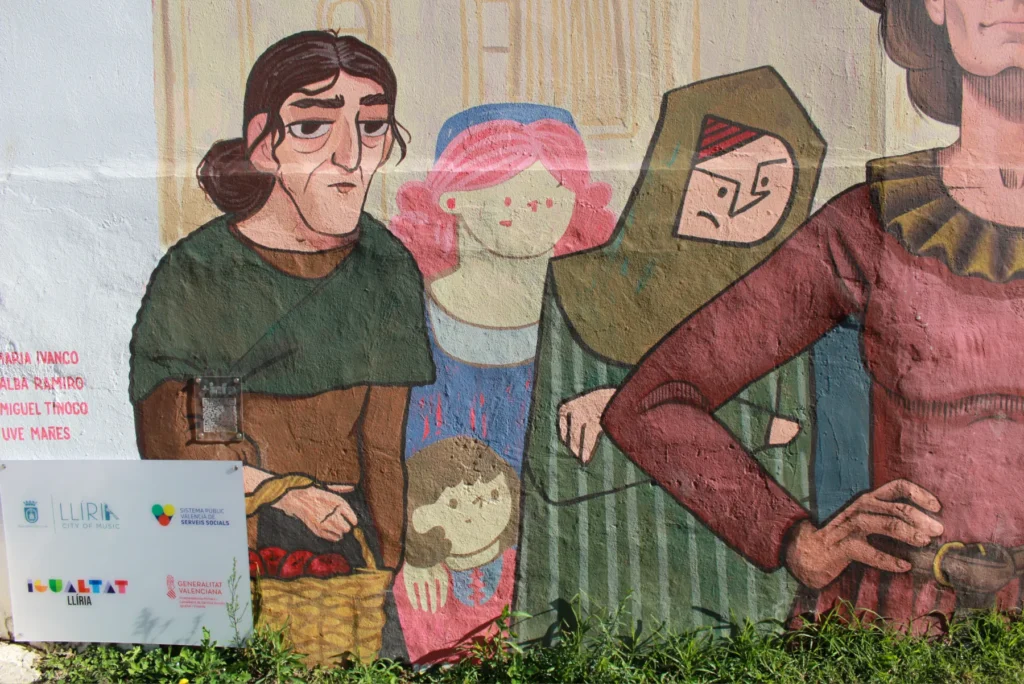
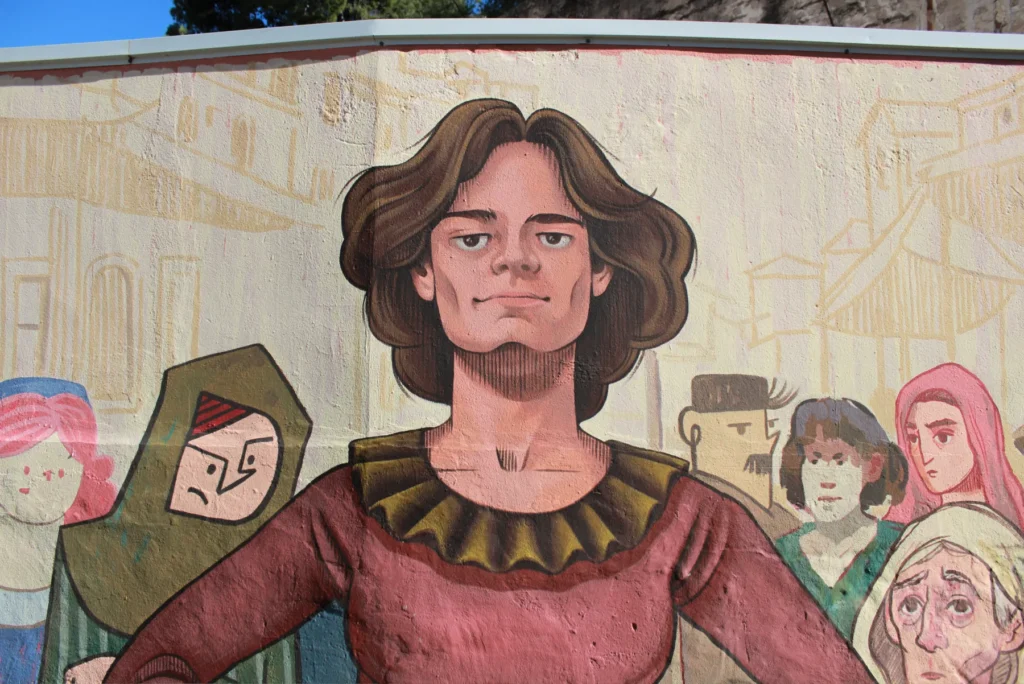
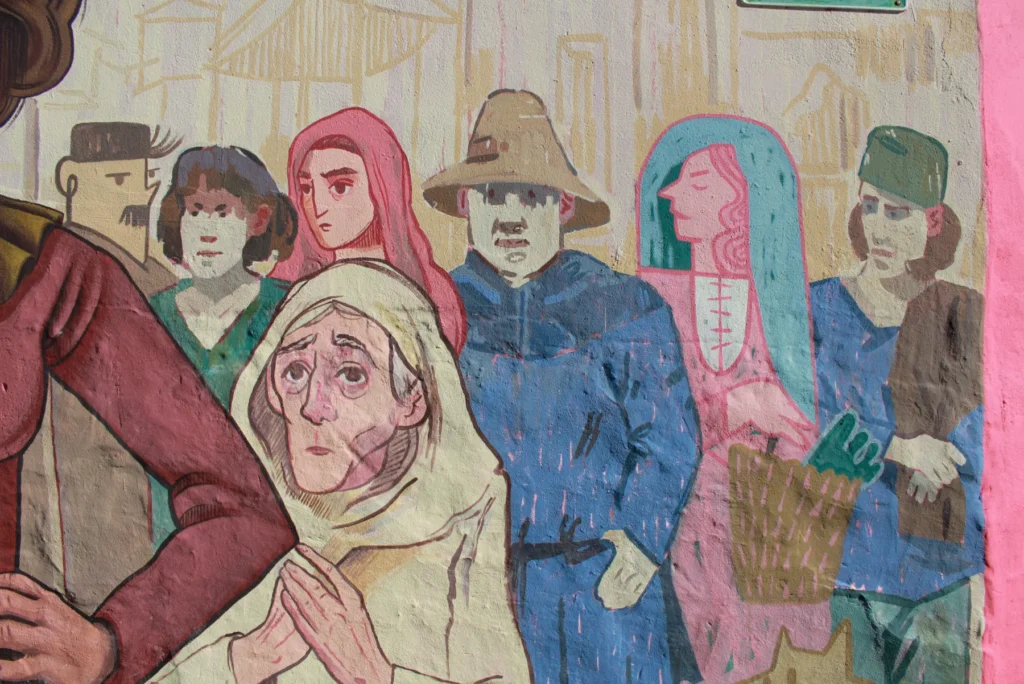
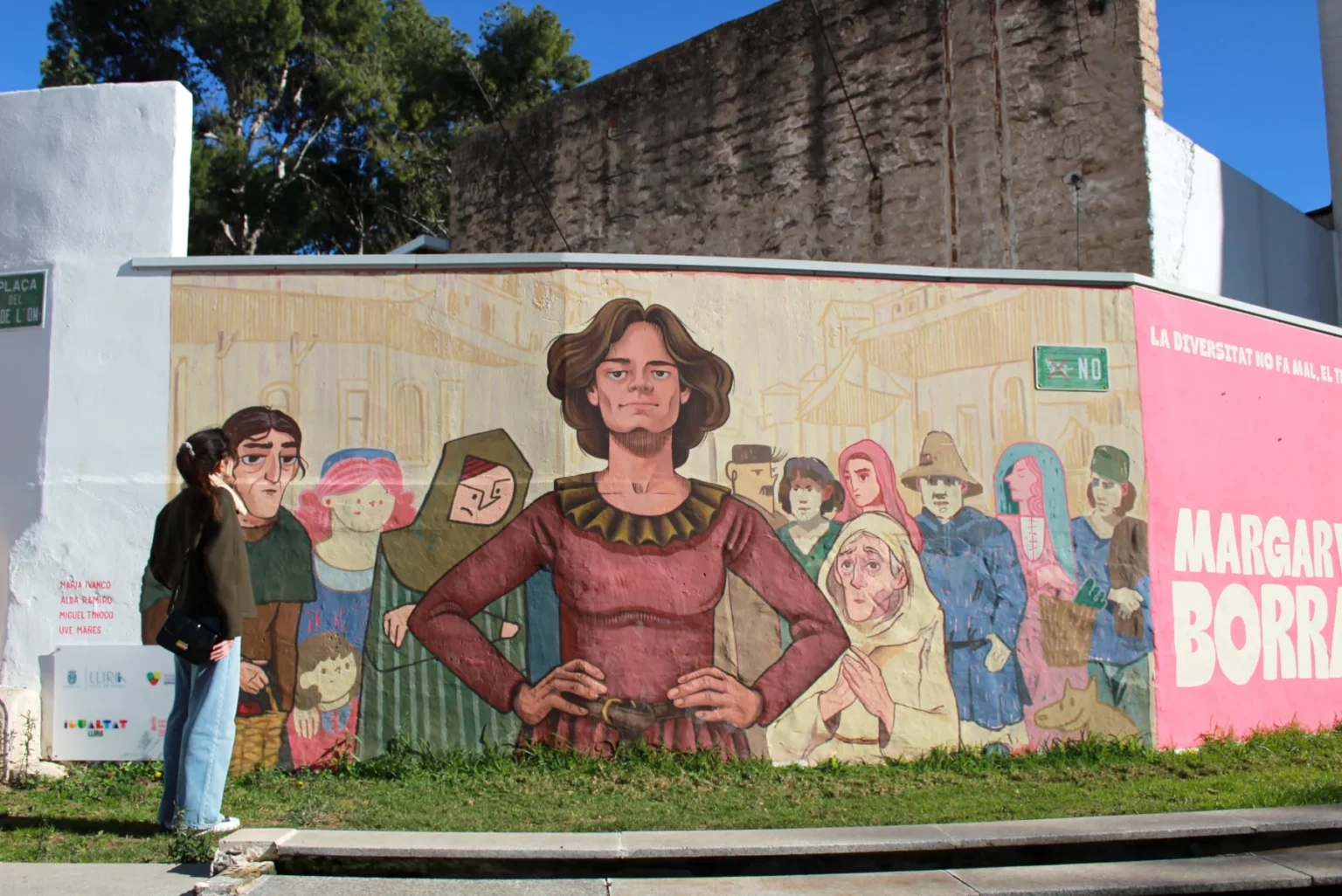
Painting the figure of Margarida is a gesture of remembrance and, at the same time, a statement about the future. The mural “Margarida Borràs” champions diversity as a source of collective wealth and reminds us of the need to defend human rights so that no one is ever persecuted for their identity again. Through painting, we make a silenced history visible and project a message of respect and dignity for all people. Diversity doesn’t hurt, your hatred does.
Pintar la figura de Margarida es un gesto de memoria, y a la vez, una declaración de futuro. El mural «Margarida Borràs» reivindica la diversidad como fuente de riqueza colectiva y recuerda la necesidad de defender los derechos humanos para que nunca más nadie sea perseguido por su identidad. A través de la pintura, hacemos visible una historia silenciada y proyectamos un mensaje de respeto y dignidad para todas las personas. La diversidad no duele, tu odio sí.
Born as Miquel, daughter of a Mallorcan notary, neither the year nor the place of her birth are known with certainty. Over time, she adopted the name Margarida and lived and expressed herself as a woman. Chronicles of the time indicate that she frequented aristocratic circles in the city and that her manner of dress and appearance attracted public attention.
Nacida con el nombre de Miquel, hija de un notario mallorquín, no se conocen con certeza ni el año ni el lugar de nacimiento. Con el tiempo, adoptó el nombre de Margarida y vivió y se expresó como mujer. Las crónicas de la época señalan que frecuentaba círculos aristocráticos de la ciudad, y que su manera de vestir y de mostrarse llamaba la atención pública.
On July 28, 1460, Margarida was executed in Valencia’s Market Square, an event recorded in the diary of chaplain Melcior Miralles. Before her death, she was imprisoned, tortured, and forced to wear men’s clothing as a form of public humiliation, a symbolic punishment typical of the intolerance of her time.
El 28 de julio de 1460, Margarida fue ejecutada a la Plaza del Mercado de Valencia, hecho que quedó registrado en el Dietario del capellán Melcior Miralles. Antes de morir, fue encarcelada, torturada y obligada a vestir ropa masculina como humillación pública, un castigo simbólico propio de la intolerancia de su tiempo.
After her death, Margarida Borrás became a symbol of the struggle for transgender rights and, more broadly, of the historical memory of LGTBI people. In recognition of this, on May 17, 2017, International Day Against LGTBIphobia, a plaque was placed in the Market Square, the site of her execution.
Después de su muerte, Margarida Borrás ha esdevenido un símbolo de la lucha por los derechos de las personas trans, y más ampliamente de la memoria histórica de las personas LGTBI. Como reconocimiento, el 17 de mayo de 2017, Día Internacional contra la LGTBIfobia, fue colocada una placa de homenaje en la Plaza del Mercado, escenario de su ejecución.